






Get early access
Discoverart & cultureacross the greaterAjmer region
Dozens more places, ready to explore
72 places across Ajmer, Pushkar & Kishangarh — and counting.

Agra Gate
Agra Gate was also part of the walled city of Ajmer constructed during the reign of Emperor Akbar. Historical records identify Delhi, Agra, Madar, Usri and Tripolia as the major gateways of the city’s fortification. The gate was named after the route leading towards Agra. During the Mughal period, it served not only as an important passage for movement but also as part of the city’s security system. Guards were stationed at the gateways to monitor people entering and leaving the city. With the expansion of Ajmer during the 19th century, the boundaries of the old city wall gradually weakened. Agra Gate remains an important landmark associated with old Ajmer.
आगरा गेट भी अकबर द्वारा बनवाई गई अजमेर की शहरपनाह का हिस्सा था। ऐतिहासिक अभिलेखों में दिल्ली, आगरा, मदार, उसरी और त्रिपोलिया को परकोटे के प्रमुख द्वार बताया गया है। इसका नाम आगरा की दिशा में जाने वाले मार्ग के कारण पड़ा। मुगलकाल में यह केवल आवागमन का रास्ता नहीं था, बल्कि शहर की सुरक्षा व्यवस्था का महत्वपूर्ण हिस्सा था। द्वारों पर पहरेदार रहते और आने-जाने वालों पर नजर रखी जाती थी। 19वीं सदी में अजमेर शहर के विस्तार के साथ पुराने परकोटे की सीमाएं धीरे-धीरे कमजोर हुईं। आगरा गेट आज भी पुराने अजमेर की पहचान से जुड़ा प्रमुख मार्ग है।

Ajmer Museum
The Ajmer Government Museum (historically called the Rajputana Museum) is a major cultural repository housed inside the iconic 16th-century Akbari Fort. Located in the heart of the city, it features a prized collection of Mughal and Rajput armor, rare miniature paintings, ancient coins, and exceptional stone sculptures dating back to the 8th century.
अजमेर राजकीय संग्रहालय, जिसे पहले राजपूताना संग्रहालय कहा जाता था, एक प्रमुख सांस्कृतिक संग्रहालय है, जो 16वीं सदी के प्रसिद्ध अकबरी किले के अंदर बना हुआ है। शहर के बीचों-बीच स्थित इस संग्रहालय में मुगल और राजपूत काल के हथियार और कवच, दुर्लभ लघु चित्र, पुराने सिक्के और 8वीं सदी की बेहतरीन पत्थर की मूर्तियों का खास संग्रह देखने को मिलता है।

Alwar Gate
The most important historical fact about Alwar Gate is that it was not among the original five gateways of Akbar-era Ajmer’s city wall. Older archaeological records mention Delhi, Agra, Madar, Usri and Tripolia as the five principal gates of the Mughal-era fortification. Available historical accounts indicate that Ajmer continued to expand beyond the original walled city, leading to the development of new settlements and routes. In this process, the route towards Alwar and the later Alwar Gate developed as part of the city’s expansion. Therefore, it would not be historically accurate to describe Alwar Gate as one of the original 16th-century gateways constructed during Akbar’s reign.

Atmateshwar Mahadev Temple
The Atmateshwar Mahadev Temple in the sacred town of Pushkar is renowned for its ancient history, underground sanctum, and unique Shiva Lingam. One of the temple’s most distinctive features is the four-faced Shiva Lingam made of white marble, enshrined in the sanctum. A smaller Shiva Lingam is also located in a cave-like structure beneath the temple. Its distinctive architecture and underground sanctum set it apart from other temples in Pushkar. According to Hindu mythology, Lord Brahma was performing a yajna (sacred fire ritual) in Pushkar when Lord Shiva arrived at the ritual site in the guise of an ascetic, carrying a skull. When Shiva did not receive the respect he expected, he became displeased and created a heap of skulls at the site, disrupting the yajna. Realizing his mistake, Lord Brahma sought forgiveness from Shiva. According to local belief, to appease Shiva’s anger, Brahma established Atmateshwar Mahadev. This legend connects the temple with the ancient religious traditions and sacred heritage of Pushkar.


Baradari


Agra Gate
- Open 24 hours
- Free entry
- Best in the morning
Inside the app
This is what walking with Living Heritage feels like
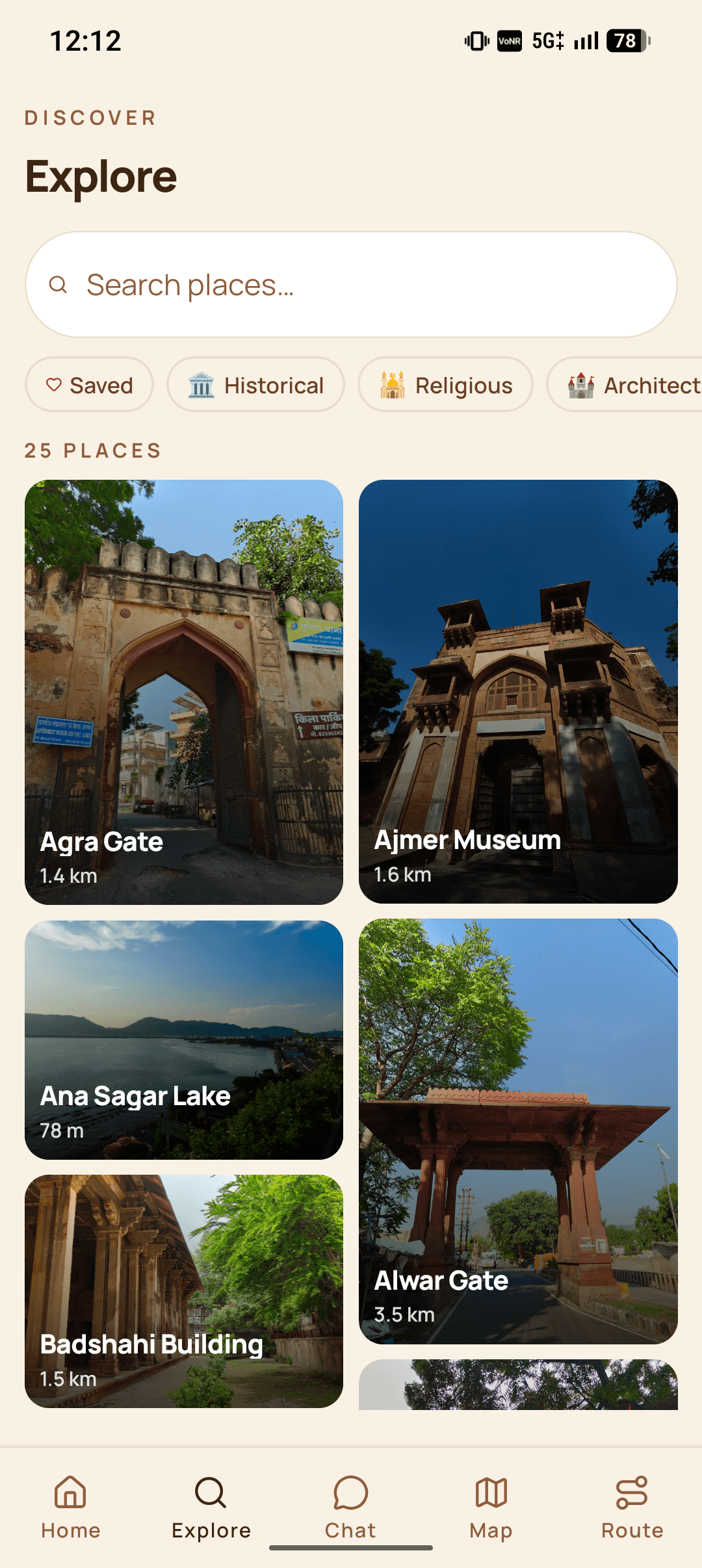
Explore every corner of Ajmer
A photo grid of places, searchable and filterable by category.
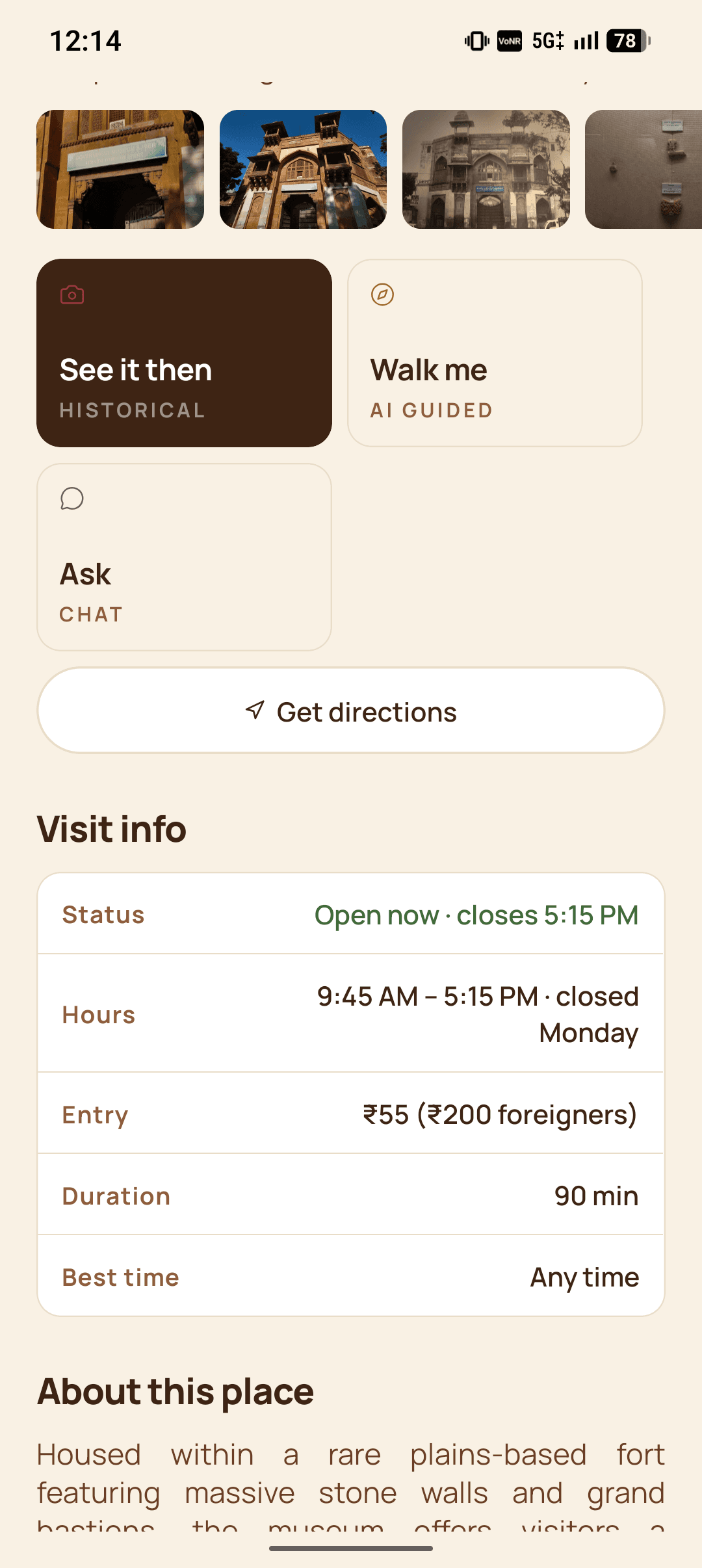
Deep dives into every landmark
History, highlights, hours and entry fees — everything before you go.
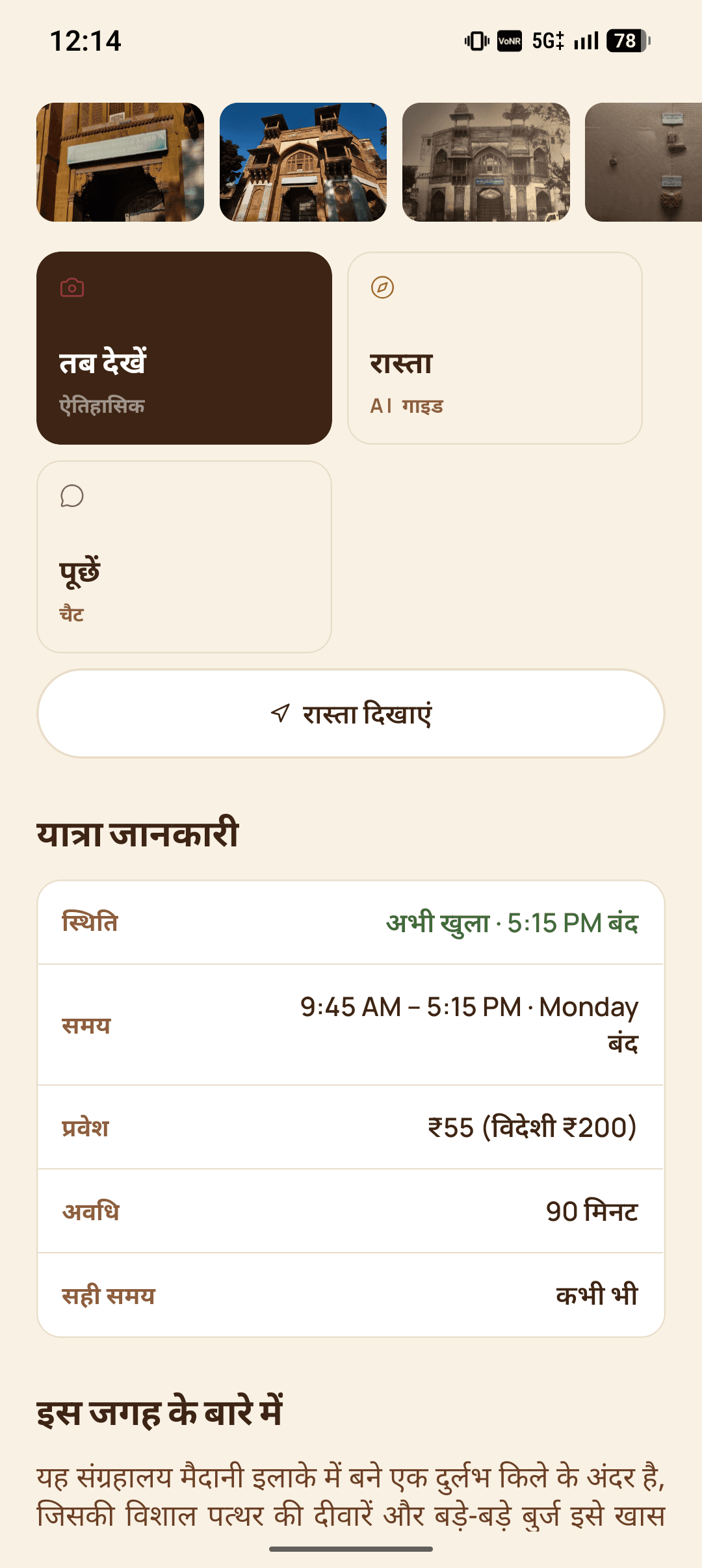
हर जगह की पूरी जानकारी
इतिहास, विशेषताएँ, समय और प्रवेश शुल्क — जाने से पहले सब कुछ।
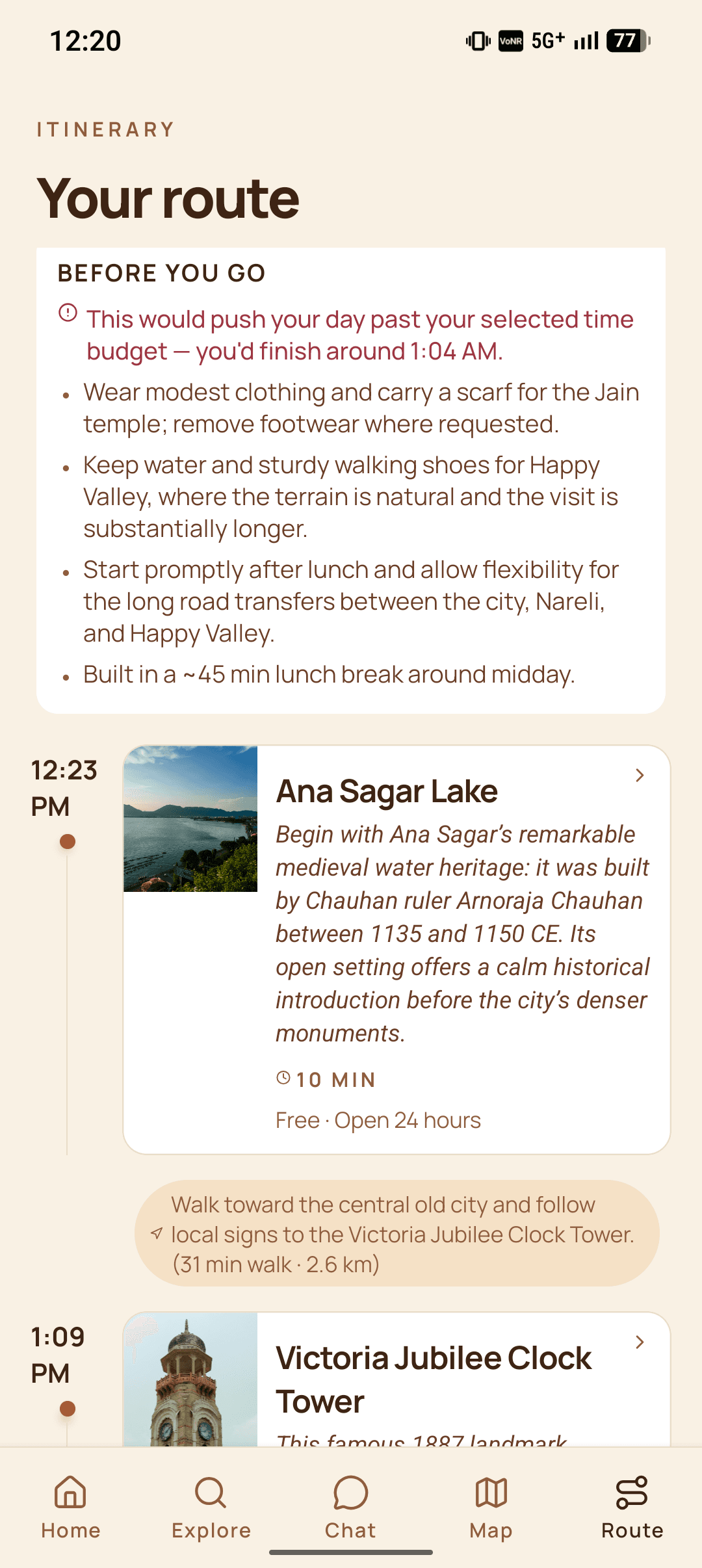
Let AI plan your day
A full timeline, stop by stop, with a reason for every stop.
Find your way, live
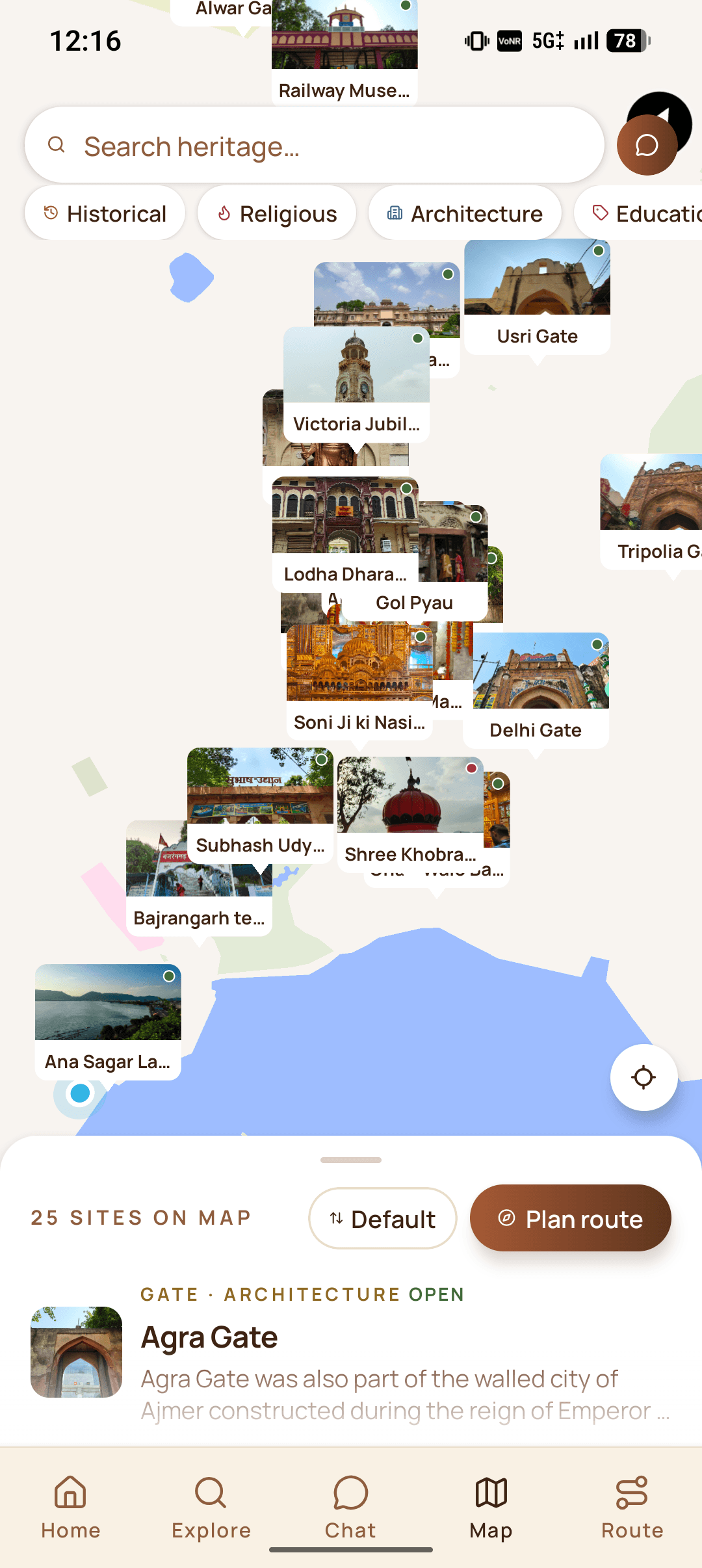
Every place pinned on a real map, with your live location as you walk.
Stories, narrated
Tap play and hear each place's history as you stand in front of it.
See it then
Drag through time to see how each place looked, decades ago.


Built for browsing
Historical, religious, nature — filter by what you're in the mood for.
In English…
Full descriptions, photo galleries and practical info, in English.
…or in Hindi
One tap switches the whole app — whichever language you're comfortable in.
Built for you
Pace, timing and order — tuned to how long you actually have.
Never lost
See what's nearby and where your route takes you next.
Hands-free
Walk, look up, and listen — no reading required.
History, layered
Old photographs laid over what stands there today.
Be the first to walk with us
Living Heritage is launching soon on iOS and Android. Leave your email and we'll let you know the moment it's live.
Ajmer, Pushkar and Kishangarh — 72 places and counting, already on your phone.
Or start now in your browser — no download needed.